Regional meeting in Tunis places agroecology at the heart of a political struggle over who decides the future of food in the Arab region
Tunis, 4 September 2026
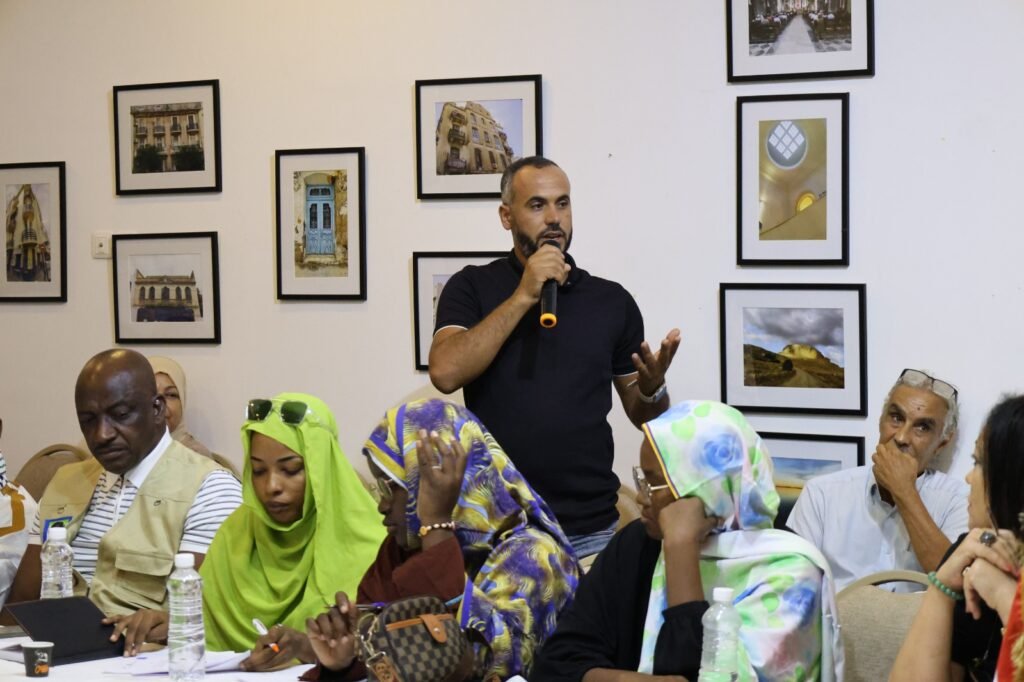
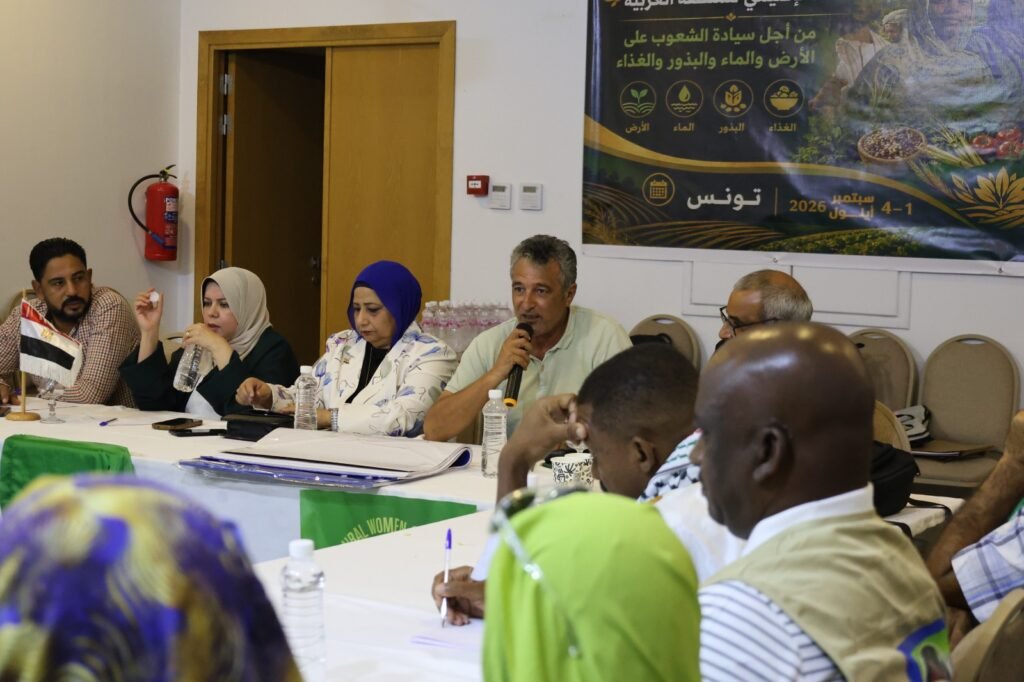
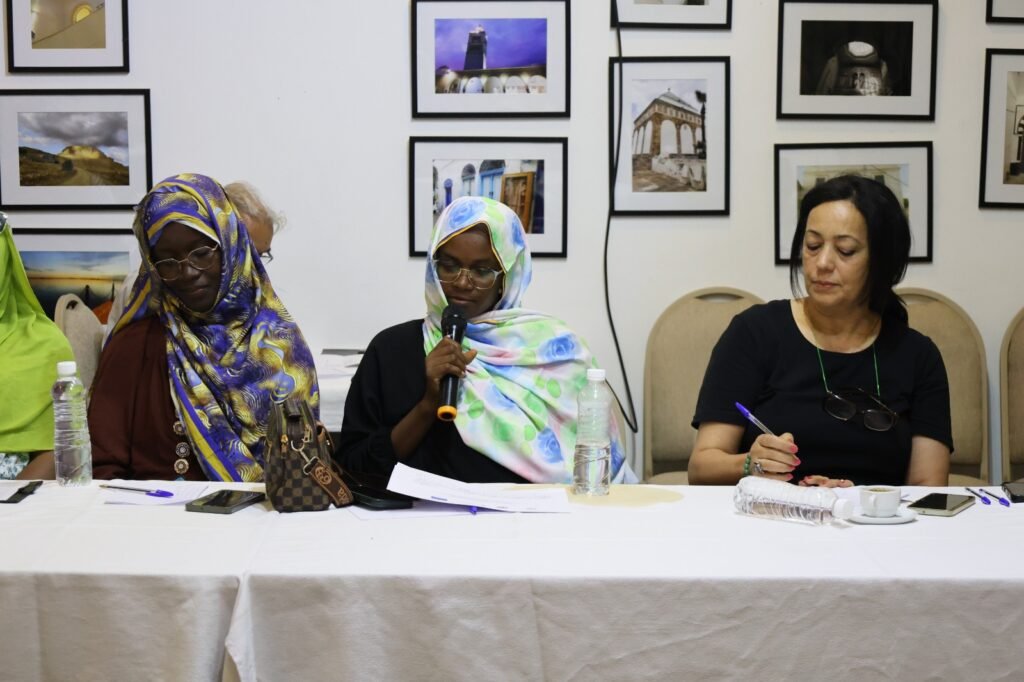
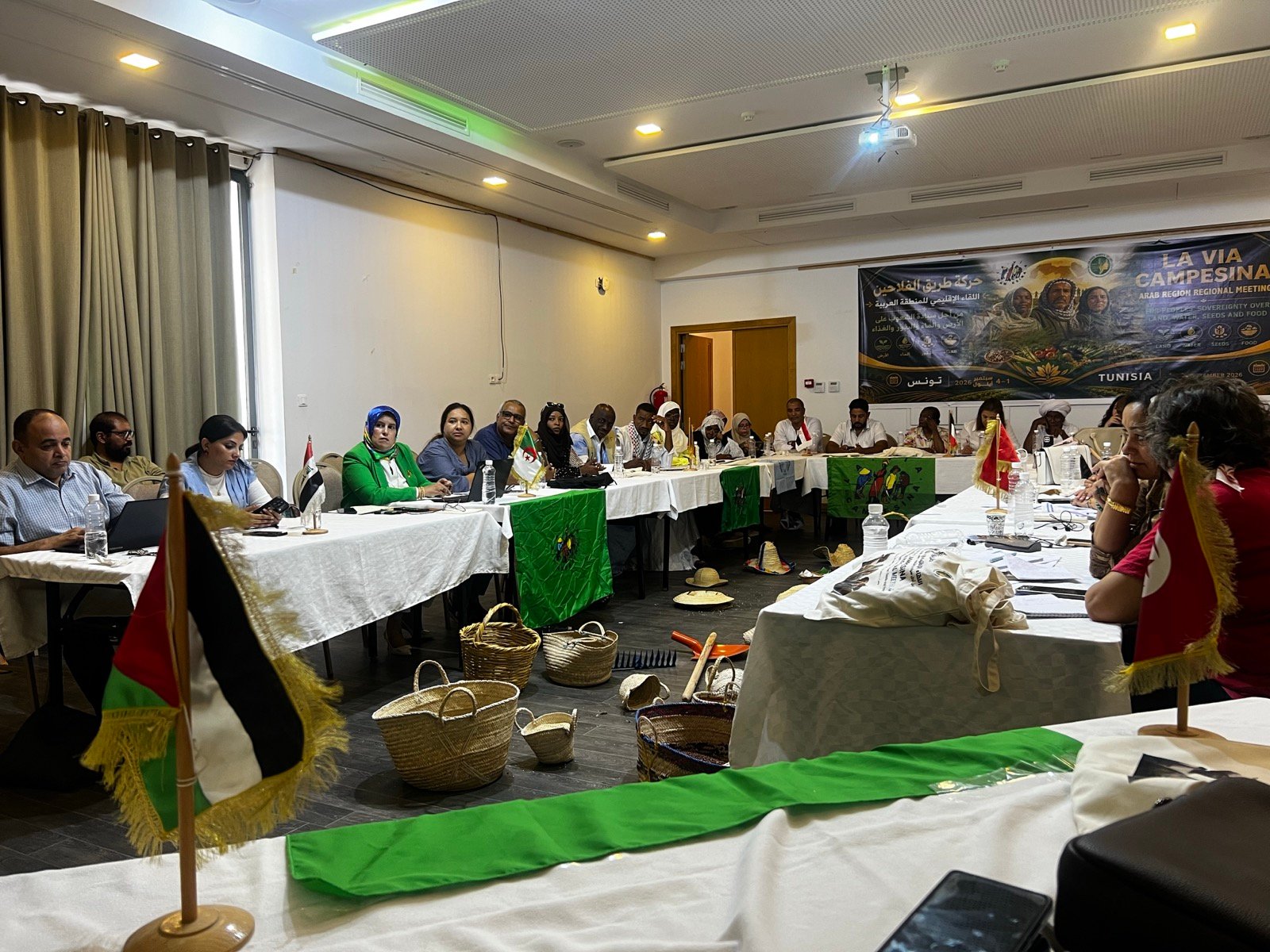
Peasant women and men and representatives of eight peasant organizations and movements from the Arab region, within La Via Campesina – Arab Region, from Palestine, Tunisia, Morocco, Egypt, Sudan, Mauritania, Iraq and Algeria, concluded four days of discussions in Tunis with a clear political position: the future of agriculture and food in the region will not be determined by increasing production alone, but by who holds decision-making power over land, water, seeds and agricultural policies. The meeting, held from 1 to 4 September 2026 under the title “Agroecology and Public Policies,” concluded with a statement that places food sovereignty and peasants’ rights in direct confrontation with an agricultural model based on indebtedness, resource grabbing and exporting the land’s production instead of feeding its people.
The central message carried by the Tunis Statement is that the crisis of agriculture and food in the Arab region is not a crisis of production, but a crisis of rights, power and resources: who owns the land, water and seeds, who sets agricultural policies, and who decides what is grown and for whom. This explains why, throughout the four days, the discussion focused on public policies rather than technical prescriptions alone.
In the opening of their statement, participants affirmed that the crises of climate, water, land degradation and biodiversity loss intersect in the Arab region with indebtedness, neoliberal economic policies, land and resource grabbing, migration, displacement, wars and occupation, and that these crises are interconnected and cannot be confronted through fragmented technical solutions, but rather by rebuilding policies and power relations on the basis of peasants’ rights and their sovereignty over their resources and food systems.
At the heart of this position, the meeting defined a clear stance on food sovereignty as the right of peoples to determine their agricultural and food systems, and the right of peasants to land, water, seeds, knowledge, organization and markets, rather than merely a goal of increasing yields. Participants linked this right to agroecology, which they rejected reducing to environmental techniques or short-term projects, describing it instead as a path toward social, environmental and political transformation based on peasant knowledge, solidarity and organization. The statement affirmed that the Arab region possesses a rich body of peasant knowledge in seed preservation, water management, rainfed agriculture and pastoralism, and that building Arab agroecology begins with reclaiming this knowledge rather than importing ready-made models, through a regional framework for peasant agroecology schools based on peasant-to-peasant learning.
At the level of natural resources, the meeting declared a clear and unequivocal position: water is a right, not a commodity; land is the basis of life, not an asset for speculation; and seeds are a living heritage developed by generations of peasants, not a commercial input subject to monopolization. The statement noted with concern the land grabbing taking place on agricultural lands in Morocco, dispossessing small-scale peasants and transforming their lands into large farms geared toward export and speculation instead of producing food for the people. It called for public policies that protect agricultural land from grabbing, ensure equitable access to water, and safeguard peasants’ right to save, select and exchange their seeds.
Participants directly linked the climate crisis to indebtedness, dependency, and prevailing development and energy policies, warning against turning climate action and the energy transition into a new gateway for land and resource grabbing under green labels, or into large-scale projects that exclude peasants and local communities from decision-making and benefits. The meeting called for a just transition that begins with rights and places social and peasant justice at the heart of climate justice, rather than a transition that reproduces resource grabbing in the language of sustainability.
The statement stressed that transformation cannot be achieved through isolated projects, but rather by changing the public policies themselves that determine the direction of agriculture and food. It called for reviewing systems of subsidies, investment, research, agricultural extension, water management, seed policies and markets, in a way that shifts priority from an input-intensive production model toward supporting small-scale peasants and agroecology. Participants committed to transforming the national consultations presented by the delegations during the meeting into an ongoing process for building shared Arab peasant programs capable of influencing national, regional and international policies, connecting local experiences with a unified regional political voice.
This orientation toward public policies, according to the statement, is what distinguishes the coming phase from decades of scattered agricultural projects that achieved localized successes without changing the overall direction of agricultural policies in the region. What is required, as participants expressed, is not more projects, but a change in the systems and rules that determine who receives support, financing, research and access to markets.
On women and youth, the meeting reached a clear position: as long as women and young people remain on the margins of decision-making, there can be no genuine ecological transformation and no strong peasant movement. The statement described women as food producers and bearers of knowledge, seeds and agricultural memory, and called for their participation to move from numerical representation to actual leadership, decision-making, and access to land, water, financing and organization, while also recognizing youth as a prerequisite for the continuity and renewal of agriculture. The meeting also placed migration, the decline of rural livelihoods, and the rights of women and men agricultural workers within the issue of food sovereignty itself.
Participants renewed their absolute and unconditional solidarity with the Palestinian people and Palestinian peasant women and men in their struggle for land, water, freedom and dignity, in the face of occupation, settlement expansion, resource seizure, displacement, and the destruction of the foundations of life and agricultural production. They affirmed that defending the Palestinian peasant’s right to remain on and cultivate their land is an integral part of the global peasant movement’s struggle for food sovereignty and peoples’ rights. The meeting also renewed its full solidarity with the Sudanese people in their ordeal under the weight of war and affirmed its support for the initiative of the Gezira and Managil Farmers’ Alliance in its campaign to cultivate the largest possible area in order to alleviate the impact of famine on the Sudanese people.
At the organizational level, participants affirmed their determination to build a more cohesive, present and effective Arab region within La Via Campesina, based on grassroots peasant organization, democracy and autonomy, while emphasizing the importance of an organized and effective Arab presence at the movement’s Mid-Term Conference in Thailand and across its various spaces and structures. The meeting committed to developing media, digital engagement and regional publications as part of building the movement’s political and knowledge power, and to producing knowledge that emerges from peasants’ voices and experiences, so that peasants are producers of knowledge rather than subjects of it.
Participants concluded the Tunis meeting by affirming that the agroecology they seek is neither a romantic return to the past nor a technical prescription for the future, but rather the restoration of the collective capacity to decide how we live, how we farm, and how we protect the land on which future generations will live. They raised the slogan: land belongs to those who cultivate and protect it, water is a right and not a commodity, seeds are the heritage of peoples and their living memory, and food sovereignty is a right, not a privilege.
Participants in the Regional Meeting on Agroecology and Public Policies – Arab Region La Via Campesina – Arab Region
La Via Campesina – Arab Region
Tunis, September 2026